



Your team sends invoices. Your customers say they’ll pay. And yet cash flow stays unpredictable. The gap between what’s owed and what’s collected is one of the most persistent frustrations in accounts receivable, and it rarely comes down to a single cause. Slow payment collection is usually a system problem: inconsistent processes, limited visibility, and reactive follow-up that lets overdue accounts age unchallenged.
In this guide, we’ll cover what accounts receivable collection is and why it matters. We’ll provide details on how to optimize your invoicing process for faster payments as well as strategies for structuring an effective collection process. Lastly, learn about how technology and AI-driven automation platforms like Kolleno improve collection outcomes.
Understanding Accounts Receivable and Its Impact
Accounts receivable (AR) refers to the money owed to a business by its customers for goods or services delivered but not yet paid for. It sits on the balance sheet as a current asset, but it only converts to usable cash when collection is successful.
Three metrics give you the clearest view of collection performance:
- Days Sales Outstanding (DSO): The average number of days to collect payment after a credit sale. Rising DSO signals invoices are aging and collection is lagging.
- Average Days Delinquent (ADD): How many days past due customers are paying on average. Isolates the late payment problem more precisely than DSO alone.
Collection Effectiveness Index (CEI): Measures how effectively your team converts outstanding receivables into cash over a given period. Track it as a trend, not a one-off figure.
The Accounts Receivable Collection Process
An effective accounts receivable collection process isn’t a single action; it’s a structured sequence of steps that moves an invoice from issuance to cash received. When each step is clearly defined and consistently executed, collection becomes predictable rather than reactive.
1. Invoice Issuance and Validation
The process starts with issuing an accurate invoice immediately after delivery or service completion.
- Ensure invoice details match the purchase order and contract terms.
- Include clear payment terms, due date, and payment instructions
- Validate customer data to prevent misrouting or delays
Errors at this stage are one of the most common causes of delayed payment.
2. Pre-Due Date Communication
Before an invoice becomes overdue, proactive communication sets expectations and reduces friction.
- Send reminder emails ahead of the due date
- Confirm receipt of the invoice with the customer
- Address any early questions or discrepancies
This step prevents invoices from becoming overdue due to simple oversight.
3. Payment Monitoring and Follow-Up
Once the due date approaches or passes, structured follow-up ensures nothing slips through the cracks.
- Track invoice status in real time
- Trigger follow-ups based on invoice age and risk level
- Escalate communication if payment is not received on time
Consistency here is critical. Gaps in follow-up are where DSO begins to rise.
4. Dispute Resolution and Exception Handling
If a customer raises a dispute, the invoice effectively pauses until the issue is resolved.
- Assign clear ownership of disputes
- Investigate and resolve issues quickly
- Keep communication transparent with the customer
Unresolved disputes are one of the primary drivers of extended payment cycles.
5. Payment Collection and Reconciliation
The final step is receiving and accurately applying payment to the correct invoice.
- Offer multiple payment options to reduce friction
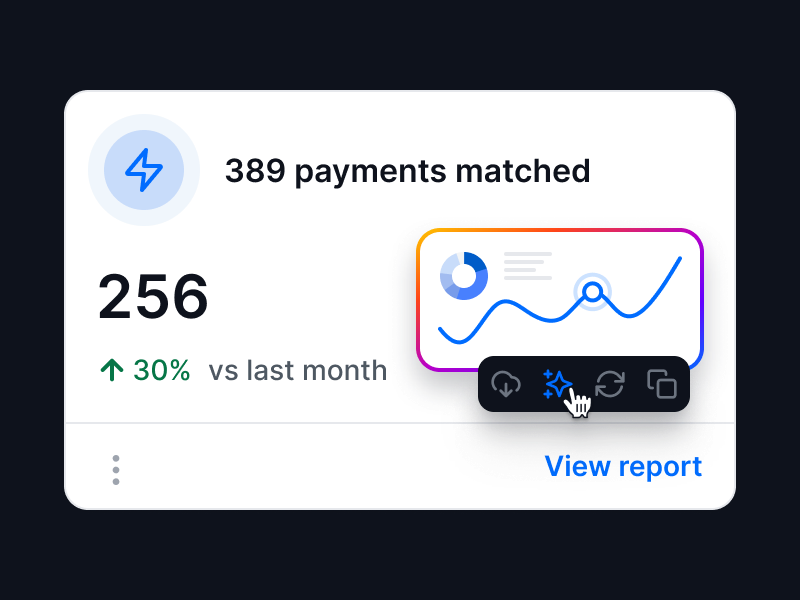
- Match incoming payments to open invoices
- Close invoices and update records in real time
Delays in reconciliation can create the false impression of overdue accounts and distort AR reporting.
Optimizing Your Invoicing Process for Faster Payments
Payment collection starts before the first invoice is sent. Invoices that arrive late, contain errors, or reference the wrong purchase order create disputes that delay payment by weeks. Here’s where most teams lose ground.
Send invoices immediately after delivery
- The problem: Every day between fulfillment and invoice issue is a day added to your DSO.
- The fix: Automate invoice generation so invoices are created and sent as soon as a delivery or service milestone is confirmed.
Set clear payment terms upfront
- The problem: Customers don’t remember the terms they agreed to during onboarding.
- The fix: Restate agreed payment terms clearly on every invoice. Clarity upfront eliminates the most common dispute trigger.
Offer multiple payment options
- The problem: Payment friction is a genuine cause of delay. If a customer can only pay by check, they will.
- The fix: Offer ACH, wire transfer, credit card, and direct debit. The more frictionless the payment journey, the faster invoices convert to cleared funds.
Use automated invoice reminders
- The problem: Manual follow-up is inconsistent, poorly timed, and impossible to scale.
- The fix: A structured reminder sequence, sent at defined intervals before and after the due date, keeps outstanding invoices visible without consuming team time.
Accounts Receivable Collections Best Practices
Not all overdue invoices deserve the same response. A structured approach to collection prioritizes effort based on risk and value, and adjusts communication based on each customer’s history.
Segment and prioritize your receivables
- Use your aging report: Organize outstanding invoices by how long they’ve been overdue. That’s the foundation of collection prioritization.
- Prioritize by risk and value: Don’t give equal attention to a 5-day overdue $500 invoice and a 60-day overdue $50,000 one.
- Segment by customer type: Communication strategy should differ for a long-standing account versus a new customer with no payment history.
Build a structured follow-up sequence
- Before due date: A polite reminder.
- On the due date: A confirmation that payment is due today.
- 7 days overdue: A firmer follow-up with clear next steps.
- 30 days overdue: Escalation to a senior contact.
- 60 days overdue: Formal notice and review of credit terms.
When this sequence runs automatically, nothing falls through the cracks regardless of team capacity.
Negotiate payment plans where appropriate
- When it makes sense: When a customer genuinely can’t pay in full, a structured plan is often better than no payment at all.
- What to document: Amount, schedule, and consequences for default. In writing. Always.
- How to manage it: Payment plans require active monitoring. If a scheduled payment is missed, escalate promptly.
Know when to escalate
- Before escalating: Document all communication, confirm the debt in writing, and exhaust negotiation options.
- Collection agencies: A legitimate last resort for domestic B2B debt, but practices need to be professionally sound and documented.
- International accounts: Jurisdiction, local law, and language barriers all affect the process. Specialist guidance is often required.
Using Technology and AI-Driven Execution for Efficient Accounts Receivable Management
Manual AR processes don’t break because teams lack effort. They break because they weren’t designed to scale. As invoice volume increases, follow-ups become inconsistent, disputes sit unresolved, and visibility lags behind reality.
AI changes that, but not through simple automation. Agentic Workflows introduce continuous, policy-driven execution across the entire receivables cycle, while keeping finance teams firmly in control of strategy and decision-making.
Automated reminders and follow-ups
- What it does: Sends reminders based on configurable rules, triggered by invoice age, customer segment, account value, or risk score.
- Why it matters: Every account is managed consistently, with no reliance on manual tracking or individual capacity. Outreach happens when it should, not when someone has time.
Online payment portals
- What it does: Lets customers view outstanding invoices, query disputes, and pay directly without contacting your team.
- Why it matters: Removes friction from the payment journey and reduces inbound queries that consume collection staff time.
AR integration with your accounting system
- What it does: Connects your AR platform directly with your ERP so payment data flows in real time.
- Why it matters: Finance teams work from a single, current view of what’s owed and what’s been collected, not disconnected spreadsheets.
Managing Customer Relationships During Collection
The goal of collection isn’t just recovering cash. It’s recovering cash without damaging the commercial relationships that generate future revenue.
- Understand payment preferences: Some customers respond to email. Others need a call. Knowing the difference improves response rates.
- Resolve disputes fast: A disputed invoice is a stalled invoice. Every dispute needs a clear owner, a defined process, and a fast turnaround.
- Communicate transparently: Clear, professional communication about what is owed and when makes customers more likely to pay on time and flag problems early.
Offer flexibility where it makes commercial sense: Early payment discounts and extended terms for strong-relationship accounts can improve collection rates without damaging the relationship.
Legal and Financial Considerations
AR collection operates within a legal framework that varies by jurisdiction. Finance teams need to understand the boundaries.
- Collection agency compliance: In the US, the Fair Debt Collection Practices Act (FDCPA) applies to consumer debt. B2B collection is less regulated, but practices still need to be documented and professionally sound.
- Payment plan documentation: Any agreed plan should be confirmed in writing: amounts, dates, and consequences for default. Verbal agreements are difficult to enforce.
- International AR challenges: Cross-border collection involves currency risk, varying payment norms, local legal processes, and language barriers. Specialist support is often required.
Economic downturns: When payment behavior deteriorates across the portfolio, proactive credit risk monitoring, tightened terms for at-risk accounts, and earlier escalation thresholds all help.
How Kolleno Improves Your Accounts Receivable Collection
Kolleno’s platform is built to solve the specific challenges finance teams face in AR collection, like slow order-to-cash and fragmented tools creating operational chaos.
Task-specific AI Agents act as force multipliers, handling follow-ups, workflows, and escalations at scale while finance professionals stay in control of policy and strategy.
Activity isn’t managed in isolation. It’s coordinated through a central orchestration layer, Maestro AI, that ensures every step in the process happens in sequence and at the right time.
- Collections execution: Agents follow defined rules, escalate to the right people at the right time, and adapt based on customer history and risk profile.
- Dispute management: Disputes are tracked, owned, and resolved as part of the collections process, so they stop extending DSO.
Full platform coverage: Credit risk monitoring, payment processing, and cash application are all connected, integrating with your existing ERP or accounting platform.
Final Thoughts
Improving the collection of accounts receivable isn’t about pushing harder on customers. It’s about building a process that’s consistent, visible, and fast. Clear invoicing, structured follow-up, proactive dispute resolution, and the right technology behind it all add up to a material reduction in DSO and a finance team that’s in control rather than reacting. If you want to see what a smarter approach to AR collection looks like in practice, book a demo of Kolleno.
- Understanding Accounts Receivable and Its Impact
- The Accounts Receivable Collection Process
- Optimizing Your Invoicing Process for Faster Payments
- Accounts Receivable Collections Best Practices
- Using Technology and AI-Driven Execution for Efficient Accounts Receivable Management
- Managing Customer Relationships During Collection
- Legal and Financial Considerations
- How Kolleno Improves Your Accounts Receivable Collection
- Final Thoughts