



Automate cash application with AI payment matching
AI matches incoming payments to invoices across currencies and entities - no more manual reconciliation. Let AI handle the matching, post directly to your ERP, and keep your books accurate without a single manual entry.
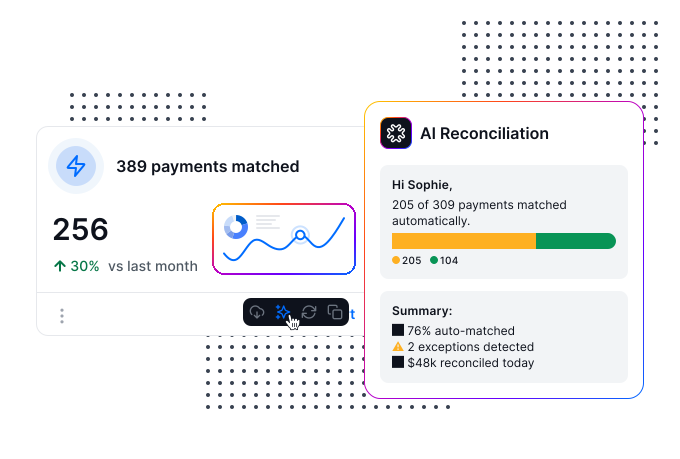





















Cash application that runs itself
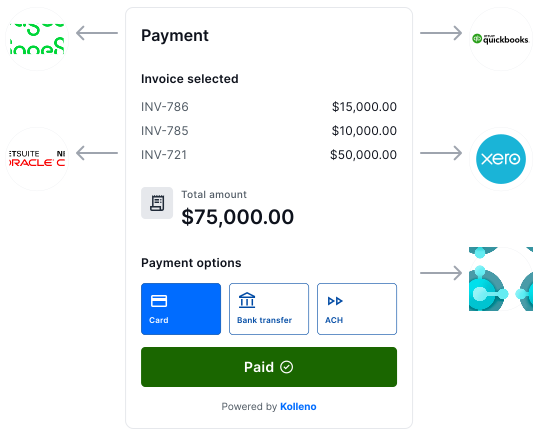
Real-time matching, straight into your ERP
Your ERP stays current so your team always works with the real numbers.
Kolleno’s AI pulls live data from your bank and ERP, matches incoming payments the moment they land, and closes the invoice automatically.
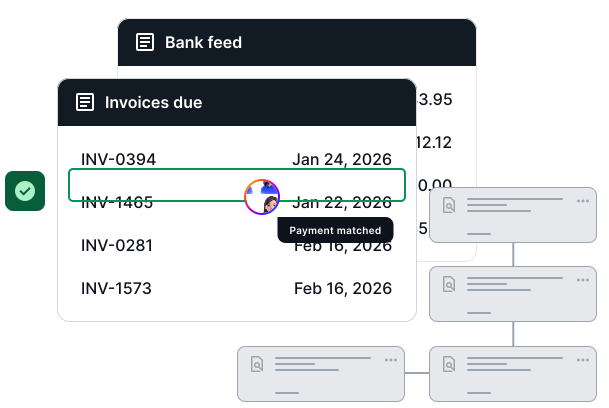
AI identifies every payment, even the ones with no reference
A missing reference number used to mean hours of detective work. Not anymore.
The moment a payment lands, AI agents scan previous correspondence, invoices sent, and any available reference to figure out exactly what it covers. No manual digging, no back-and-forth across bank portals.
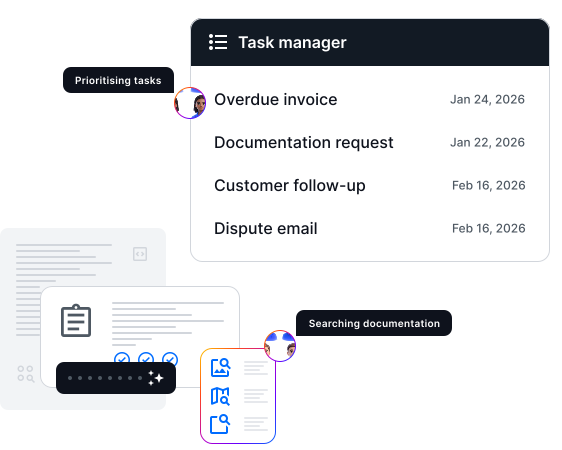
AI handles routine tasks, your team handles the exceptions
Free your team for the work that actually needs them.
Every routine payment matched, posted, and closed by AI. Your team only steps in when there’s a real discrepancy worth their attention, so they can focus on the work that actually needs a human.

Be on top of reconciliation, without the manual chasing
Know exactly what's been matched, what's pending, and what needs attention.
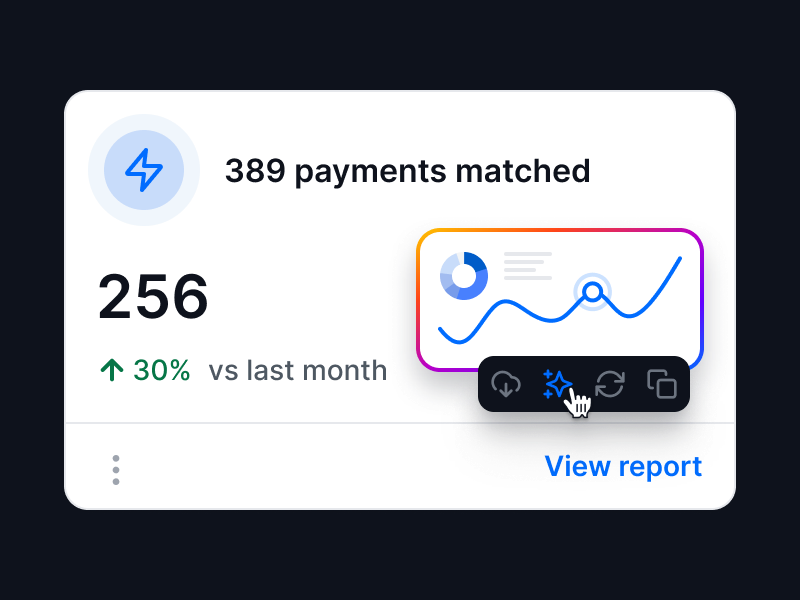
Monitor all your payments from scheduled to reconciled, and stay on top of transactions that require attention. Make notes and comments on transactions to share with your team.
Your team's effort, multiplied by AI Agents
Custom AI Agents, orchestrated by you
Configure AI Agents to handle collections your way. Set communication tone, choose languages, define escalation triggers, and adjust follow-up timing seamlessly.

The real cost of manual cash application
This is what your team deals with today, and what it looks like with Kolleno.
Sereni delegated 20 hours of their manual work to AI Agents


We went from spending 20+ hours per week on manual reconciliation to having more than 82% of our transactions matched automatically, with a few exceptions that require manual review.
- 82% payments matched automatically
- 20 hours of work saved each week
- 30% improvement in credit notes matching accuracy
Frequently asked questions
What is payment reconciliation?
Payment reconciliation is the process of comparing and matching internal financial records with bank statements to ensure accuracy and completeness of records. It involves verifying that the amount and details of payments recorded in a company’s books align with the corresponding transactions in bank statements or other payment sources.
Why do businesses need payment reconciliation?
You need payment reconciliation for several reasons. Firstly, it can help you identify discrepancies, errors, or fraud in your financial records. By comparing the payment data with bank statements or other sources, you can catch any discrepancies and take appropriate actions to resolve them. Secondly, payment reconciliation ensures that all transactions are properly recorded and accounted for, which is crucial for accurate financial reporting and analysis. It provides you with a clear and accurate picture of your cash flow and financial health. Additionally, payment reconciliation helps you maintain good relationships with customers and suppliers by promptly resolving any payment discrepancies and ensuring timely and accurate processing of transactions.
What are the types of payment reconciliation?
There are various types of payment reconciliation depending on the nature of the transactions involved. Some common types include:
Bank reconciliation: This involves comparing the transactions recorded in a company’s bank statement with the corresponding entries in the company’s accounting records.
Credit card reconciliation: It involves matching credit card transactions processed by the business with the credit card statements received from the card issuer.
Vendor reconciliation: This type of reconciliation is performed to ensure that the amounts owed to suppliers or vendors match the records maintained by the business. It helps in identifying any discrepancies or errors in the payment process.
Customer reconciliation: It focuses on comparing customer payment records with the amounts recorded in the company’s books. This type of reconciliation helps identify any outstanding payments, discrepancies, or errors in customer transactions.
Internal reconciliation: This involves reconciling transactions within a company’s internal systems, such as between different departments or subsidiaries, to ensure consistency and accuracy in financial reporting.
These types of payment reconciliation help businesses maintain financial accuracy, transparency, and trustworthiness in their operations.
How does Kolleno Payment reconciliation work?
Our system offers a seamless reconciliation process with our advanced payments matching engine. The engine provides scores for each transaction that can indicate whether we have found a perfect or suggested reconciliation match. Then, you can view and verify each match, whether it’s a one-to-one, one-to-many, or many-to-one match. Additionally, our system enables you to account for any potential discrepancies that may arise from foreign exchange rates and additional bank charges. With Kolleno, you can streamline your payment reconciliation process with ease and accuracy.
How can I try Kolleno’s payment reconciliation feature?
During the Kolleno demo, you have the option to either upload your own accounting data or utilize the provided sample data to experience firsthand how the payment reconciliation feature operates.



Still have questions?
Can’t find the answer you’re looking for? Please chat to our friendly team.
Step into the new world of order-to-cash
Turn your revenue cycle into a predictable engine with an AI workforce.