

If you’re a mid-market or enterprise B2B business and are finding it hard to maintain consistent collections, a Days Sales Outstanding (DSO) reduction software might be a good option for you.
In this article, we’ll discuss:
- What DSO reduction software is: The ways in which it helps finance teams reduce DSO and improve cash flow.
- Why DSO increases: The common operational challenges that slow collections and impact working capital.
- How modern DSO reduction software works: The features that automate collections, payments, cash application, and dispute management.
- What to look for in a solution: The capabilities, integrations, and AI features that support long-term growth.
What Is Days Sales Outstanding?
Days Sales Outstanding is the average number of days it takes a business to collect payment after issuing an invoice. It indicates how efficiently your organization converts credit sales into cash. A lower DSO generally means a faster, healthier collections process.
How to calculate DSO
Days Sales Outstanding is calculated using the following formula:
DSO = (Accounts Receivable ÷ Total Credit Sales) × Number of Days
For example, if your business has $500,000 in accounts receivable and $2 million in credit sales, plus you’re measuring over a 90-day period, your DSO would be:
(500,000 ÷ 2,000,000) × 90 = 22.5 days
This means it takes your business an average of 22.5 days to collect payment after making a credit sale.
What is a good DSO?
There’s no single benchmark for a good DSO. It depends on your industry, customer payment terms, and business model. However, a lower DSO generally shows that customers are paying invoices promptly and your collections process is operating efficiently.
A sign of a good DSO is your payment terms. For example, let’s say most invoices are due within 30 days, but your DSO consistently exceeds 45 or 60 days. This may indicate collection inefficiencies, payment delays, or process bottlenecks that need to be addressed.
Why DSO matters beyond collections
DSO reveals your organization’s financial health by showing how efficiently you convert accounts receivable into usable cash. It is a measure of your available working capital and operational liquidity.
If you have a lower DSO, it can mean that your business improves cash flow by converting revenue into available cash more quickly. That, in turn, gives you greater flexibility to fund operations, invest in growth, and meet financial obligations without relying on external financing.
Payments are collected consistently, and receivables data is up to date. Your finance leaders can produce more accurate cash flow forecasts and make better-informed business decisions.
[Also read: The ROI of Automated Receivables]
Why High DSO Is Holding Your Business Back
It’s common for finance teams in growing B2B businesses to reach a tipping point where manual accounts receivable processes can no longer keep pace. Managing a few hundred invoices manually is fairly simple. But when it’s thousands of invoices, multiple payment terms, and customers across different regions, all managed simultaneously, those processes become inefficient.
Manual reminders become inconsistent, cash application slows, disputes are difficult to track, and reporting becomes outdated. The outcome is higher DSO, less predictable cash flow, and employees spending more time on administrative tasks than on strategic collections.
At this stage, you need to improve processes and not simply add more headcount. DSO reduction software offers a scalable solution to accelerate cash collection and improve working capital.
How DSO Reduction Software Helps You Collect Cash Faster
DSO reduction software helps you accelerate cash collection by automating key processes across the Order-to-Cash (O2C) cycle. It removes manual bottlenecks from collections, payments, dispute resolution, and cash application. The result is shorter payment cycles and improved cash flow visibility.
Beyond helping you collect payments faster, DSO reduction software improves efficiency across your finance operations. Here are some of the key ways it helps reduce DSO:
Automates payment reminders and collections
Manual follow-ups are time-consuming and often inconsistent, especially as invoice volumes grow. DSO reduction software replaces them with intelligent, policy-based workflows. These automatically send payment reminders through channels such as email, SMS, or customer portals. Communications can also be personalized based on customer behavior, payment history, or invoice status.
Many platforms also reduce payment friction by including features such as one-click payment links, self-service payment portals, and multiple payment options. Instead of asking customers to log into separate systems or manually arrange bank transfers, payment links make it easy to pay immediately. Timely, automated follow-ups combined with easier payment methods mean your business can collect cash sooner and reduce DSO.
Automates cash application
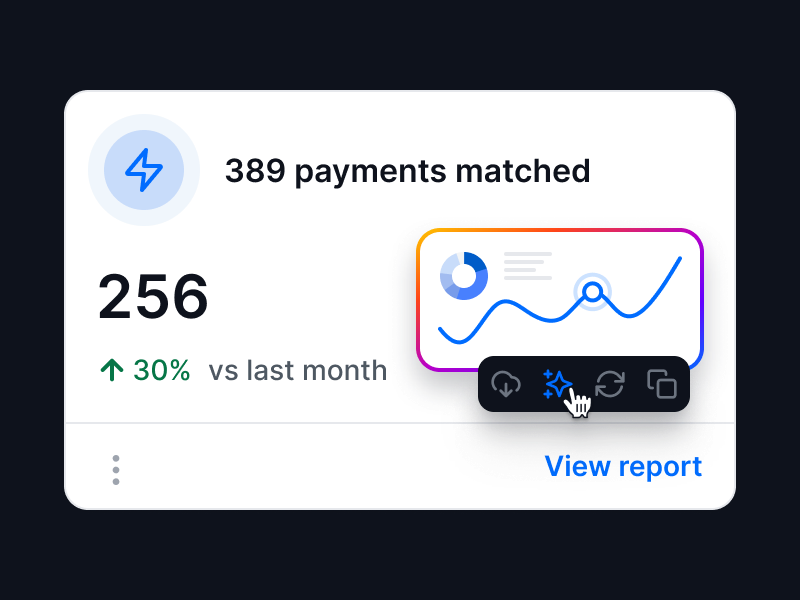
Reconciling incoming payments manually is another time-consuming task. DSO reduction software automates cash application by matching incoming payments to open invoices using data from multiple sources. It intelligently handles exceptions and updates your ERP in real time. This significantly reduces the manual effort required to reconcile payments while improving accuracy.
With payments applied faster, your finance team gains an up-to-date view of outstanding receivables. This prevents unnecessary collection reminders for invoices already paid, reduces ledger delays, and enables teams to focus on resolving genuine collection risks instead of routine administrative tasks. The result is faster cash visibility, more efficient collections, and ultimately lower DSO.
Resolves disputes faster
Invoice disputes are one of the biggest causes of delayed payments and rising DSO. Dispute information can spread across emails, spreadsheets, and multiple systems. As a result, your finance teams may struggle to track ownership, identify bottlenecks, and resolve issues quickly.
DSO reduction software centralizes dispute management in a single workspace, allowing teams to log, track, prioritize, and resolve disputes more efficiently. You get clear visibility into the dispute status. Automating tasks where possible helps reduce resolution times by removing payment blockers sooner. The result? Invoices move smoothly through the collections process. As a result, you get faster payments and improved customer relationships, lowering DSO in the process.
Provides real-time visibility into receivables
Manual reporting often means your employees are working with outdated information. They might find it difficult to prioritize collections or accurately forecast cash flow. Without real-time visibility, overdue accounts, payment trends, and collection risks can easily go unnoticed until they begin affecting working capital.
To address this challenge, DSO reduction software provides live dashboards and reporting. These give you an up-to-date view of outstanding receivables, payment performance, and collection activity. Now, teams can identify at-risk accounts earlier, prioritize high-impact actions, and make more informed decisions. This improves cash flow forecasting and strengthens collections strategies.
How AI Improves DSO Reduction
Where traditional automation followed predefined rules, AI analyzes payment patterns to prioritize accounts and automate routine tasks. It allows you to make faster, smarter collection decisions. This helps reduce DSO while giving finance professionals more time to focus on strategy and customer relationships.
Predictive payment behavior
AI analyzes historical payment data and customer behavior to identify invoices that are most likely to become overdue. You can then take proactive action before late payments impact cash flow.
Intelligent prioritisation
Instead of treating every overdue invoice the same, AI prioritizes collection activities based on payment risk, customer behavior, and business rules. It automates routine follow-ups, recommends the next best action, and executes approved workflows. Your teams can focus their attention where it delivers the greatest impact.
Human expertise with AI execution
AI doesn’t replace finance professionals in accounts receivable; it strengthens their decision-making around collections. While AI handles repetitive, policy-based execution, you remain in control of customer relationships, credit policies, and strategic decisions. This combination of human expertise and AI execution enables you to reduce DSO more efficiently while maintaining consistency and oversight.
Choosing the Right DSO Reduction Software
The benefits of DSO reduction software are clear, but not every platform delivers the same capabilities. The right solution should do more than automate collections for you. It should support your operations, integrate with your existing systems, and scale as your business grows. Here are the key factors to consider when comparing DSO reduction software.
Integration capabilities
Can the software integrate seamlessly with your existing ERP or accounting system? If not, you’ll likely end up with disconnected data, duplicate manual entry, reporting inaccuracies, and more administrative work (the very problems you’re trying to eliminate). The right DSO reduction software should offer real-time, two-way integration with your existing finance stack, creating a single source of truth for invoices, payments, and customer data. This ensures your finance team is always working with accurate, up-to-date information.
AI-driven capabilities
What AI capabilities does the platform offer? Look for modern software with AI features such as predictive payment behavior, intelligent account prioritization, automated cash application, and AI-driven collections workflows. These capabilities help you identify collection risks earlier, automate routine work, and make faster, more informed decisions that reduce DSO.
Scalability
Will the software continue to meet your needs as your business grows? Some platforms perform well at lower invoice volumes but struggle as customer numbers, payment methods, and collections complexity increase. The right solution should scale alongside your business., it should allow you to manage larger transaction volumes, support multiple entities or regions, and adapt workflows without disrupting your finance operations.
Ease of use
How quickly can your finance team adopt the software? Even the most powerful platform won’t deliver value if it’s difficult to use. Look for an intuitive interface, straightforward workflows, and minimal training requirements, so your team can begin improving collections from day one. Easy-to-use software also encourages adoption across the finance function, helping you realize value faster.
Vendor support
What level of support does the vendor provide after implementation? Sometimes, the most reliable platforms occasionally require assistance. It could be answering product questions, resolving technical issues, or helping you optimize workflows as your business grows. Choose a provider that offers responsive support, ongoing guidance, and regular product improvements, so your finance team has the confidence to keep collections running smoothly without unnecessary disruption.
How Kolleno Helps Finance Teams Reduce DSO
Accelerate collections with an AI-powered Order-to-Cash (O2C) and Accounts Receivable (AR) automation platform that combines intelligent insights, automated workflows, and expert support.
Kolleno helps you streamline collections, improve payment performance, and reduce the time it takes to convert invoices into cash.
Our platform provides:
- Order-to-Cash automation: Connect every stage of the O2C process to create a more efficient, consistent collections workflow.
- Multi-Agent AI Workforce: Use AI agents to monitor accounts, recommend next actions, and automate routine collection activities.
- Policy-driven execution: Apply business rules and approval workflows to ensure actions align with finance policies.
- ERP integrations: Connect seamlessly with existing systems to centralize financial data and improve visibility.
- Human expertise with AI execution: Combine automation with specialist support to optimize collections performance.
- An operational extension of finance teams: Increase capacity without adding unnecessary manual workload.
Ready to improve your collections process and reduce DSO? Speak with Kolleno’s experts to discover how AI-powered automation can help your finance team unlock cash faster.
Frequently Asked Questions
Does DSO improve cash flow?
Lowering DSO improves cash flow by reducing the time it takes to collect outstanding invoices. Faster collections mean cash is available sooner to fund day-to-day operations, invest in growth, meet financial obligations, and improve working capital. While DSO itself doesn’t generate more revenue, reducing it increases the speed at which revenue is converted into available cash.
How can I reduce DSO quickly?
Reducing DSO quickly starts with improving your accounts receivable processes. Automating payment reminders, offering convenient payment options, resolving disputes faster, streamlining cash application, and prioritizing high-risk accounts can all accelerate collections. DSO reduction software helps organizations implement these strategies consistently and at scale, making it easier to shorten payment cycles and improve cash flow.
What features should DSO reduction software include?
The most effective DSO reduction software should include automated collections workflows, intelligent payment reminders, online payment portals, automated cash application, dispute management, real-time reporting, and AI-powered analytics. It should also integrate seamlessly with your ERP system to provide a single, accurate view of your receivables and support more informed collection decisions.
Can DSO reduction software integrate with ERP systems?
Yes. Most modern DSO reduction platforms integrate with leading ERP and accounting systems, including NetSuite, Microsoft Dynamics 365, SAP, Oracle Fusion, Sage Intacct, QuickBooks, and Xero. Real-time, two-way integration ensures invoice, payment, and customer data remain synchronized, reducing manual data entry and providing a single source of truth for finance teams.
Is DSO reduction software suitable for mid-sized businesses?
Yes. DSO reduction software is well-suited to mid-sized businesses that are experiencing growth, increasing invoice volumes, or more complex collections processes. By automating repetitive tasks and improving visibility into receivables, organizations can scale their finance operations without relying solely on additional headcount while improving cash flow and reducing DSO.