

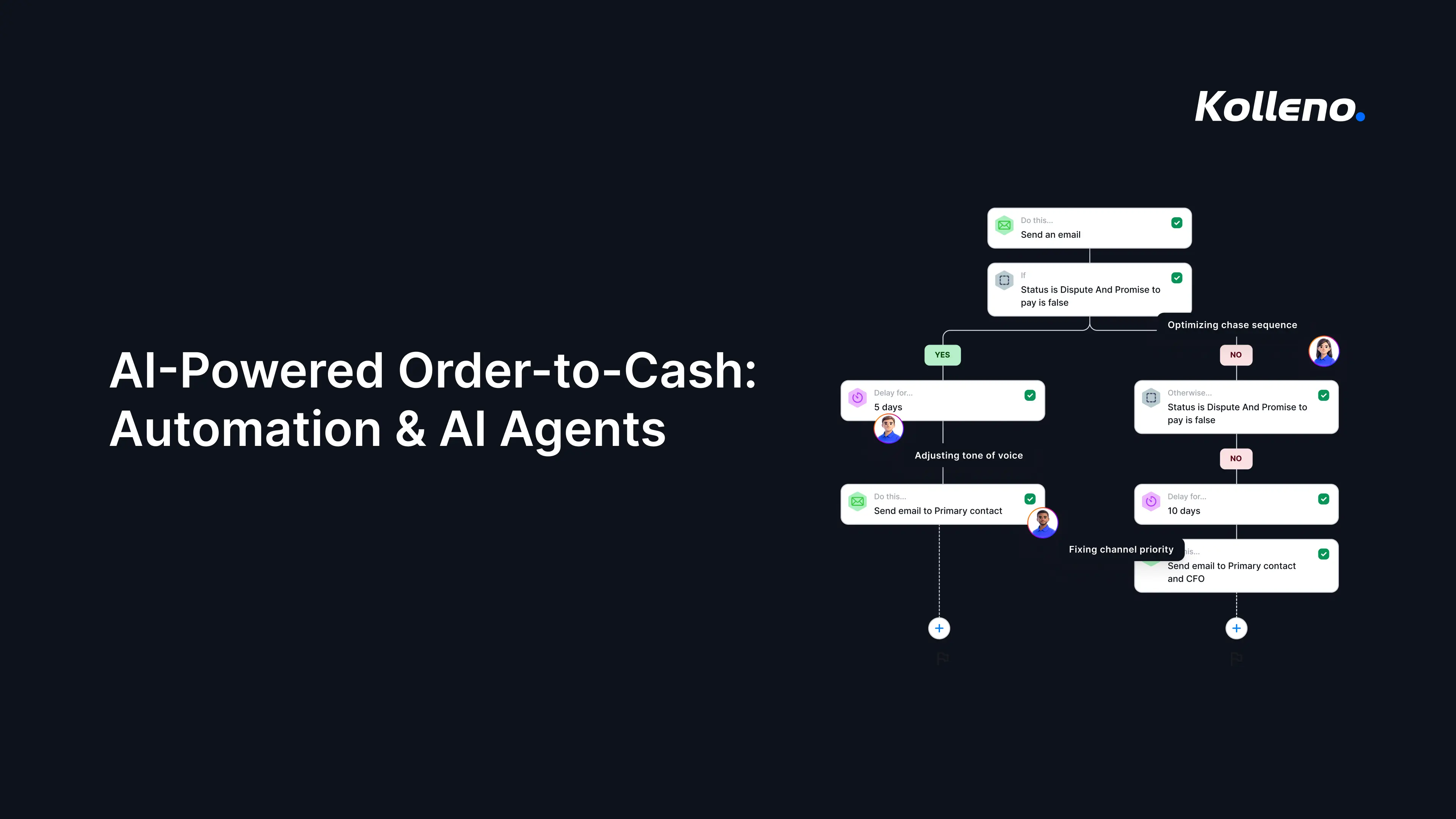
AI continues to be a hot topic in accounting for many reasons, one of which is its ability to optimize the order-to-cash system. Taking it from a time-consuming, error-riddled process to a proactive, automated one, artificial intelligence is truly transforming the way O2C and other accounting workflows work.
But don’t just take our word for it. According to a 2025 survey by Gartner, 59% of finance leaders said their finance function was already using AI, up from 37% in 2023. If you’ve come to the realization that your O2C process could benefit from AI, now is the time to understand what’s possible. From how AI is used in the O2C cycle to the best way to implement it, this guide covers everything you need to know about AI-powered order-to-cash.
Why So Many Are Leaving Behind Manual Processes
Accountants and firms are embracing AI more than ever because it simplifies the manual work involved in order-to-cash. Traditional methods are slow, prone to errors, and leave cash trapped in disconnected systems.
Think of it like this:
You could spend hours checking customer and order information, reviewing accounts receivable aging, following up on overdue invoices, and other repetitive, time-consuming tasks. Or, you can focus more on providing the best financial advice and let AI handle the administrative workload.
Nevertheless, here are some everyday scenarios that are making many say goodbye to manual O2C processes:
Invoice Preparation and Delivery
Repeatedly checking data, generating invoices, and sending them creates unnecessary administrative work.
Reviewing Aging and Prioritizing Accounts
Working through aging reports and customer records to decide what needs attention takes time and becomes harder to do consistently as invoices increase.
Payment Follow-Ups
Chasing overdue invoices requires repeated emails, reminders, responses, and follow-ups. And the work doesn’t end after one message because you need to keep track of who has responded, who hasn’t, and what needs to happen next.
Cash Application
The more transactions, the more time spent determining where money belongs. Matching incoming payments to invoices can involve working through large transaction volumes, incomplete remittance information, partial payments, and exceptions.
Customer and Account Monitoring
Keeping up with payment behavior, outstanding balances, credit limits, and account changes requires constant review. Doing these tasks manually becomes increasingly difficult as your customer base grows.
Understanding AI-Powered Order-to-Cash
AI-powered O2C uses machine learning, intelligent automation, predictive analytics, and autonomous agents to optimize the financial and operational cycle, from receiving a customer purchase order through to collecting and applying the final payment.
AI speeds up the O2C cycle by automating repetitive tasks, reducing manual errors, and improving cash flow visibility.
How AI-Powered O2C Works: Common Use Cases and Benefits
AI can be applied at almost every stage of the O2C workflow, from processing incoming orders to managing invoices. Here are some of the most common ways AI is being used in O2C:
Order Processing
AI classifies and extracts information from orders received through PDFs, digital forms, emails, and other channels. Then, it validates the information against existing customer and order data, reducing manual data entry and helping orders move through the process faster.
Invoice Processing and Management
AI takes over the repetitive tasks that would normally require manual intervention, such as extracting data from invoices, checking information for discrepancies, matching payments, and updating records. It allows transactions to move through the O2C process more consistently while directing exceptions and issues to the right people.
Credit Management
AI analyzes customer information, payment history, and other data to support credit assessments and identify changes in customer risk. This can help your team make faster credit decisions and respond to changes in customer behavior earlier.
Accounts Receivable Monitoring
AI can continuously analyze outstanding invoices, payment behavior, and aging data to identify accounts that may require attention, giving you better insight into changing account conditions.
Collections Management
With AI consistently assessing payment behavior and account information, you can better prioritize collection activities. It also enables personalized customer communications and automated routine follow-ups.
Reduce Days Sales Outstanding (DSO)
By identifying accounts and invoices that are more likely to pay late, AI can help you act earlier and improve the efficiency of your collections process.
Cash-Flow Forecasting
AI analyzes historical payment patterns, outstanding receivables, and other financial data to help you identify trends and support more accurate cash-flow forecasts.
Challenges and Considerations for AI in O2C
Adopting AI in your O2C workflow requires a strong foundational infrastructure, clean data, and careful cross-functional coordination. Below, we discuss some of the bottlenecks you can expect and essential considerations before adding AI to your O2C system.
Major Implementation Challenges
- Data fragmentation: AI tools often struggle and can even amplify errors if your billing, revenue, and collection data are spread across disconnected legacy systems.
- Change management: Multiple teams, such as finance, sales, and logistics, must learn to adapt to autonomous processes and how to supervise AI-driven decisions. This is not always a smooth transition because employees rely on manual habits that can take time and effort to replace.
- Complex integrations: Connecting AI systems to existing ERP and CRM infrastructure can be difficult because it often requires technical work to make sure the systems can share data and work together properly.
- Managing exceptions: AI can handle routine O2C processes well, but unusual cases can be more difficult. Partial payments, unclear remittance information, and disputed invoices may still require additional checks and human review.
Key Considerations for AI Adoption
- Connect and unify your data: Ensure your AI can work with the systems you already use, including your ERP, CRM, and customer portals. Keeping data connected across these systems helps AI work with accurate, up-to-date information.
- Keep people involved where needed: While AI handles routine, high-volume tasks, your team should review exceptions and more complex cases. This ensures that important decisions are reviewed by the right people and that issues AI cannot confidently resolve are handled appropriately.
- Build security and compliance into the process: Consider using strong security, user permissions, data governance, and audit trails from the beginning. It ensures your AI processes meet your organization’s security and compliance requirements.
How to Automate Your O2C Process With AI, Step-by-Step
You know what types of challenges to expect and what to consider; now we look at how you can practically implement AI into your O2C cycle. A phased approach might be best, as it allows you to identify where AI can have the most impact, test it within your existing processes, and expand its use as your team gains confidence.
1. Assess Your Current O2C Workflow
The first step is to look at how your O2C process currently works. What takes up the most time and involves the most manual work? Knowing this helps you decide where you need AI the most, so you can target those areas first and gradually move on to the rest.
2. Identify the Right AI Use Cases
To help you with the first step, focus first on repetitive, high-volume tasks such as invoice processing, cash application, collections, and credit assessments.
3. Connect AI to Your Existing Systems
Now that you’ve identified where AI is needed the most, make sure your AI solution can integrate with the systems you already use. This includes your ERP and CRM. Connected systems allow the AI to access customer, invoice, payment, and account information in one place, instead of moving data between different systems manually.
4. Set Clear Rules for Human Oversight
With everything well integrated, decide which tasks AI can handle independently and which require human review. This helps prevent AI from making decisions it isn’t equipped to handle and provides your team control over more complex or sensitive situations.
For example, AI can handle routine processes, while tasks like exceptions, low-confidence decisions, and more complex cases can go to your team.
5. Start Small and Measure Results
Rather than changing your entire O2C process at once, start with a focused use case or part of the process. During this phase, you can track metrics such as DSO, collection performance, cash application accuracy, and time spent on manual tasks. It shows you what is working, identifies areas that need improvement, and helps you decide whether you’re ready to expand AI to other parts of O2C.
6. Scale What Works
Once you’ve established that AI is delivering the expected results, gradually expand it to other areas of your O2C process. Use what you learn from the initial implementation to improve workflows and make future adoption easier.
Are AI Agents the Future of Order-to-Cash?
Regular AI processes generate data when prompted, and traditional automation follows fixed rules. These are highly effective for handling repetitive, time-consuming tasks that don’t require human oversight.
AI agents take it further by acting as autonomous systems that can plan, make decisions, and manage multi-step workflows to achieve a specific goal. They operate independently while still involving humans when approval or intervention is needed. They can also use APIs, access portals, and interact with software to complete tasks.
When you apply these capabilities to O2C, AI agents transform the workflow in the following ways:
- Work across multiple steps: An agent can complete a series of connected tasks instead of automating just one.
- Make decisions: Agents can assess information, follow rules, and decide what action to take next.
- Take action: They can trigger that next step themselves, such as sending a reminder, updating a record, or escalating an issue.
- Work continuously: Agents can monitor O2C processes and respond when something changes, rather than waiting for someone to start a task.
- Handle exceptions: They can recognize when something doesn’t follow the usual process and either take the appropriate action or send it to a person for review.
- Coordinate across systems: AI agents can work across connected finance systems to complete a workflow from start to finish.
The potential impact of using AI agents is already being recognized across the finance industry. According to Deloitte, 80.5% of finance and accounting professionals surveyed believe AI-powered tools, including AI agents, could become standard tools in the profession within the next five years.
Kolleno’s AI Approach to O2C
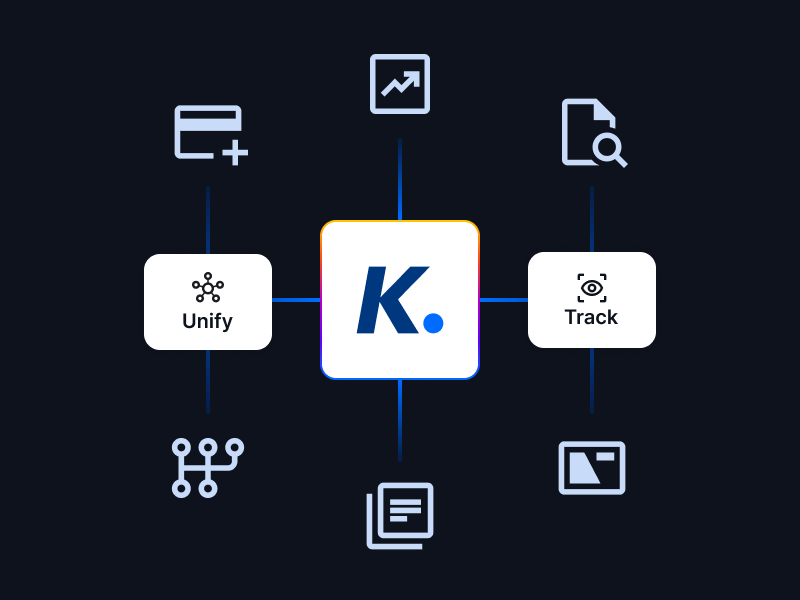
Our approach to AI-powered O2C is different because we combine a connected O2C platform with a Multi-Agent AI Workforce, rather than using AI to automate individual tasks in isolation. As a result, Kolleno’s AI-powered O2C capabilities can execute workflows across collections, payments, cash application, credit risk, disputes, and forecasting.
At the center of this approach is Maestro AI, our orchestration layer. Maestro coordinates task-specific AI agents across the O2C process, routing work, sequencing actions, and keeping execution aligned with the objectives and policies set by your team.
What makes this approach different?
- End-to-end O2C coverage: AI can work across collections, payments, cash application, credit risk, disputes, and forecasting within one connected platform.
- Multi-agent execution: Maestro coordinates specialized AI agents rather than relying on a single AI capability.
- Policy-based execution: You define the rules and objectives that guide how agents operate.
- Connected data: Kolleno connects with the systems you already use, allowing agents to work with current O2C data.
- Configurable autonomy: You decide where AI can act independently and where human approval is required.
- Full visibility and control: AI actions are logged, with approval workflows and audit trails helping finance teams see what the AI is doing.
Ready to see how AI can transform your O2C cycle? Explore Kolleno to see how our AI-powered approach can help automate more of the O2C workflow while keeping you in control.
Frequently Asked Questions
How does Kolleno integrate with existing finance systems?
Kolleno connects with the ERP, CRM, banking, and other systems you already use. This allows O2C data to flow between systems without requiring teams to manually move information between them.
Can I control how much autonomy Kolleno’s AI agents have?
Yes. Kolleno provides different levels of AI autonomy, allowing you to decide where AI can provide insights, assist your team, or execute workflows independently. Human approval can remain part of processes when needed.
What happens when an AI agent encounters an exception?
Kolleno’s AI agents can identify situations that fall outside defined workflows and involve a team member when human judgment or approval is required. This keeps you involved in more complex cases while AI handles routine work.
How does Kolleno keep you in control of AI?
Kolleno follows a Human Expertise, AI Execution approach. You set the objectives, policies, and rules that guide AI execution, while visibility, approval workflows, and audit trails help teams maintain oversight.
Can businesses introduce Kolleno’s AI gradually?
Yes. Kolleno’s configurable levels of autonomy allow businesses to introduce AI into their O2C processes progressively. Start with areas where you see the greatest opportunity and increase AI’s level of involvement as you become more comfortable with the process.
- Why So Many Are Leaving Behind Manual Processes
- Understanding AI-Powered Order-to-Cash
- How AI-Powered O2C Works: Common Use Cases and Benefits
- Challenges and Considerations for AI in O2C
- How to Automate Your O2C Process With AI, Step-by-Step
- Are AI Agents the Future of Order-to-Cash?
- Kolleno’s AI Approach to O2C
- Frequently Asked Questions