










Your customers are paying. Collections are working. But your Days Sales Outstanding (DSO) still isn’t where it needs to be, and your finance team can’t get a clear view of actual cash positions without digging through spreadsheets and bank statements. The culprit isn’t late payments—it’s what happens after the payment hits your bank account.
Manual cash application creates a hidden lag between customer payments and updated accounts receivable records. That lag inflates DSO, weakens cash flow management, and forces finance leaders to make decisions based on data that’s already stale. The solution isn’t better collections—it’s automating the entire cash application process so payments move from bank feeds to ERP systems in real time.
This article breaks down how cash application automation cuts DSO, which KPIs prove it’s working, and what high-performing finance teams actually achieve when they stop matching payments manually.
What Is Cash Application?
Cash application is the process of matching incoming payments and remittance data to outstanding invoices, then updating customer accounts and ERP systems to reflect that those invoices have been paid. It sounds straightforward, but in practice it involves reconciling payment amounts, identifying which invoices a payment covers (sometimes across multiple invoices or partial payments), and ensuring your accounts receivable records stay accurate and current.
This isn’t just a back-office admin task. Cash application is a core part of accounts receivable and the broader order to cash process (O2C). It’s the step that converts “payment received” into “revenue recognized and cash position updated.” Without accurate, timely cash application, your financial data lags behind reality.
How It Impacts DSO and Cash Flow
When payments sit unapplied or get misapplied, the consequences ripple through your entire financial operations:
- AR ageing becomes unreliable. If a customer paid three days ago but the payment hasn’t been applied yet, your AR ageing report still shows that invoice as outstanding. Your DSO calculation is based on inflated receivables that don’t reflect actual cash positions.
- Outstanding invoices look higher than they really are. This distorts cash flow forecasting and makes it harder for finance leaders to assess working capital needs or plan strategic initiatives. You’re making decisions based on old data, even when the underlying cash has already arrived.
- Revenue recognition gets delayed. Depending on your accounting policies, unapplied cash can delay when revenue hits your books, affecting financial performance metrics and creating unnecessary complexity at month-end close.
The bottom line: slow cash application extends your order to cash cycle and inflates days sales outstanding on paper, even when customers are paying on time. It’s a hidden drag on financial health that automation can fix.
Why Manual Cash Application Keeps DSO High
Manual cash application might have worked when transaction volumes were low and payment methods were simple. But as businesses scale, this process becomes a bottleneck that directly impacts Days Sales Outstanding and cash flow visibility. Here’s why.
The Typical Manual Cash Application Process
1. Download bank statements and payment files. Finance teams log into multiple bank portals and payment processors to export transaction data, often dealing with different file formats and structures across sources.
2. Consolidate electronic payments and payment data. All those downloaded files get opened in spreadsheets, where finance teams manually consolidate payment information, clean up formatting inconsistencies, and try to piece together which payments correspond to which customers.
3. Manually match customer payments to outstanding invoices. This is the most time-consuming step. Finance teams search through open invoices to find matches, handle partial payments that don’t align cleanly with invoice amounts, and deal with remittance data that’s incomplete, unclear, or missing entirely. When a single payment covers multiple invoices, the matching gets even more complex.
4. Update ERP and accounting records by hand. Once matches are identified, someone has to manually enter the payment application into the ERP system, update customer accounts, and mark invoices as paid or partially paid.
As incoming payments grow, this entire workflow becomes a drag on operational efficiency. What might take 5-10 minutes per payment adds up quickly when you’re processing hundreds or thousands of transactions weekly. Finance teams end up spending days on repetitive tasks instead of higher-value work like cash flow forecasting or credit management.
Why This Keeps DSO High
The manual cash application process creates a critical lag between when payments hit your bank account and when they’re reflected in your accounts receivable records. During that lag—which can stretch from days to weeks for complex payments—your DSO calculations are based on inflated receivables. Outstanding invoices that have technically been paid still show up as open in your AR ageing, making your cash flow metrics look worse than reality.
This lag also kills cash flow visibility. Finance leaders can’t trust their ERP reports to show actual cash positions because they know payments are sitting in a queue waiting to be processed. Poor cash flow management follows naturally—when you don’t have clear, real-time data on what’s been paid and what’s truly overdue, you’re forced to make decisions based on outdated information. Manual intervention at every step also increases error rates and billing errors, which create disputes, corrections, and even more delays. The operational costs pile up: more time on routine tasks, higher error rates requiring fixes, and overdue payments that look overdue even when customers have already paid.
How Cash Application Automation Works
Cash application automation isn’t magic—it’s a combination of integrations, machine learning, and automation tools working together to handle the entire cash application process without constant manual intervention. Here’s how it actually works.
From Manual Matching to Automated Payment Matching
At its core, cash application automation uses software to replace the manual steps finance teams currently perform. Instead of downloading files, consolidating data in spreadsheets, and matching payments by hand, the system handles everything from data ingestion through to posting in your ERP systems.
Step 1: Ingest payment and remittance data automatically. The system connects directly to bank feeds, payment processors, and customer portals to pull in payment data as it arrives. Card payments, bank transfers, direct debits, electronic payments—all flow into a central platform without anyone logging into portals or downloading files.
Step 2: Parse and normalize remittance data. Incoming remittance information is rarely standardized. Automation tools use AI and machine learning to read remittance data from emails, PDFs, and various file formats, then normalize it into a structured format the system can work with. This handles the messiest part of cash application—making sense of incomplete or unstructured payment references.
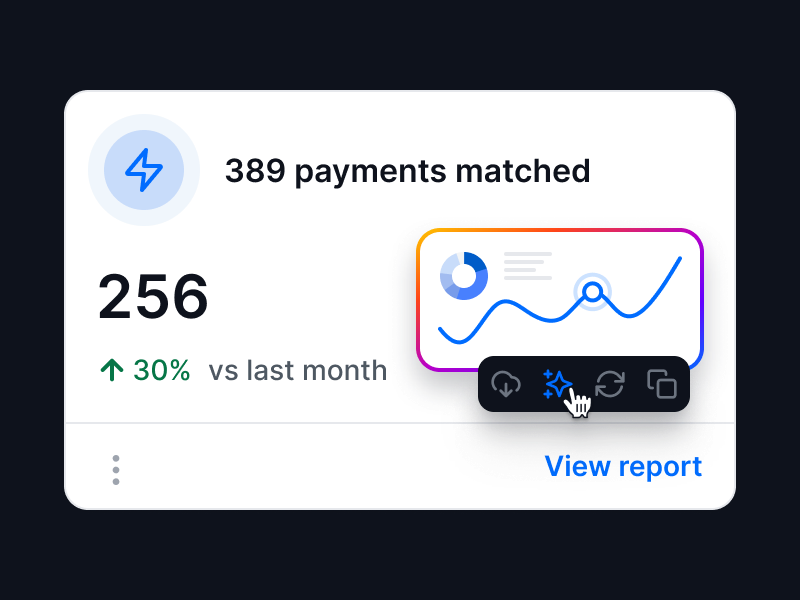
Step 3: Apply automated payment matching logic. The system matches payments to outstanding invoices using configurable matching rules and business logic. It handles straightforward one-to-one matches, but also complex scenarios: a single payment covering multiple invoices, partial payments that don’t match invoice amounts exactly, and credit notes that need to be applied. Machine learning improves accuracy over time by learning from payment patterns and customer behavior.
Step 4: Post results back to ERP systems. Once payments are matched—either automatically or after quick human review of exceptions—the system pushes updates directly into your existing systems. Customer accounts get updated, invoices are marked as paid, and your accounts receivable records stay current without manual data entry.
Step 5: Flag exceptions for human review. Not every payment matches cleanly, and that’s fine. The system automatically routes exceptions—short pays, overpayments, missing remittance information—into a workflow where finance teams can investigate and resolve them quickly, rather than hunting through spreadsheets or email threads.
The key shift: finance teams move from spending hours on repetitive tasks to handling only the genuine exceptions that need human judgment. The routine matching work—often 85-95% of total volume—happens automatically.
Where Kolleno Fits in This Picture
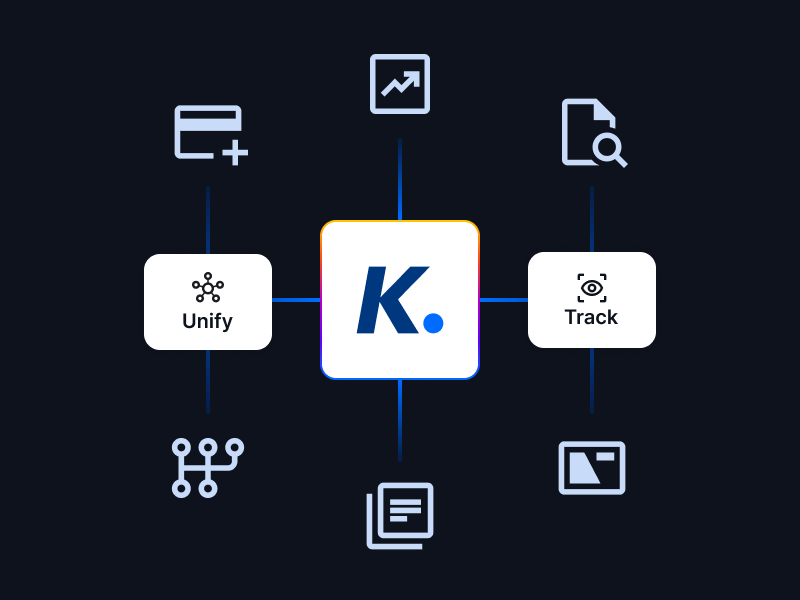
Kolleno is an AI-powered accounts receivable automation platform with particularly strong cash application capabilities. It provides live reconciliation across ERP systems, payment processors, and bank feeds, so your financial data stays synchronized in real time. The platform’s AI-driven matching engine learns from your payment patterns and gets smarter over time, reducing manual intervention as it goes.
Kolleno is designed to work with existing systems like NetSuite, Microsoft Dynamics 365, QuickBooks, and other major ERP platforms—it doesn’t replace your core financial infrastructure, it extends it. The platform handles the messy work of ingesting payment data from multiple sources, applying intelligent matching logic, and keeping your ERP records current, while giving finance teams a clear view of what’s been reconciled and what needs attention.
The KPI Stack – Metrics That Show Cash Application Automation Is Working
To prove that automation is actually cutting DSO and improving cash flow, you need to track the right metrics. These fall into two categories: process KPIs that measure how well your cash application function is operating, and outcome KPIs that show the business impact on Days Sales Outstanding, working capital, and financial performance.
Process KPIs for the Cash Application Team
These metrics tell you how efficiently your cash application process is running and where bottlenecks or issues remain.
- Straight-Through Processing (STP) Rate: The percentage of incoming payments applied with zero human touch. Higher STP rates mean more payments flow through automatically, which speeds up cash posting and reduces operational costs. Best-in-class teams aim for 85-95% STP.
- Average Time to Apply Cash: Time from when a payment is received to when it’s applied in your ERP systems. This directly affects your reported Days Sales Outstanding—the faster you apply cash, the sooner your AR balances reflect reality.
- Match Rate Accuracy: Percentage of payments matched to the correct invoices without later correction. High accuracy reduces billing errors, prevents customer disputes, and eliminates the need for time-consuming manual reconciliation after the fact.
- Exception Rate: Percentage of payments needing manual review due to missing remittance data, unclear references, or payment amounts that don’t match invoices cleanly. This is a proxy for how much time finance teams still spend on manual processes versus strategic work.
- Unapplied / Unidentified Cash Balance: The total value of payments sitting in your system that haven’t been tied to a specific customer or invoice. Lower balances indicate better payment reconciliation and fewer delays in updating customer accounts.
Outcome KPIs Linked to DSO, Cash Flow, and Experience
These metrics connect cash application performance to the business outcomes that finance leaders and CFOs actually care about.
- Days Sales Outstanding (DSO): The headline metric. Lower DSO means you accelerate cash flow and improve cash flow management. When cash application speeds up, payments get posted faster, AR balances drop, and DSO follows.
- Median Days Late / Days Beyond Terms: A leading indicator of whether collections and cash application are actually speeding up the payment process. If customers are paying within terms but cash sits unapplied for days, your median days late won’t improve. Automation closes that gap.
- % of Invoices Paid On Time / Within X Days Overdue: Connects directly to customer payments behavior and customer satisfaction. When payments are applied quickly and accurately, customers see their accounts updated properly, which reduces confusion and disputes.
- Overdue Balance / Overdue Accounts: Shows how much cash is locked in late payments versus sitting unapplied. Reducing this metric improves working capital and gives you a clearer picture of actual collection risk versus administrative lag.
- Cash Flow Visibility Indicators: Metrics like forecast accuracy and variance between forecast and actual cash positions. Better cash application gives finance teams real time visibility into cash, which makes cash flow forecasting more reliable.
- Operational Costs and Hours Spent on Cash Application: Efficiency gains from automation. This supports the business case by showing how much time finance teams reclaim for credit management, strategic initiatives, and other high-value work instead of routine tasks.
The pattern across these KPIs is consistent: when you improve process metrics like STP rate and time to apply cash, you see direct improvements in outcome metrics like DSO, overdue balances, and working capital. That’s how you prove automation is working.
Real-World KPIs – What High-Performing Teams Achieve With Automation
Theory is useful, but numbers from actual companies tell the real story. Here’s what finance teams achieve when they automate cash application and broader AR workflows with Kolleno.
DNA Payments – Faster Collections and Lower Overdue Balances
DNA Payments is a high-volume payments business dealing with complex payment processes and heavy reconciliation workloads. Before implementing Kolleno, manual cash application created bottlenecks that kept overdue accounts artificially high and made it difficult to see which customers were genuinely late versus which payments were simply sitting in a queue.
Key results with Kolleno:
- 110% increase in collections within 30 days overdue. More payments got applied quickly through Kolleno’s automated matching, which meant the team could focus collection efforts on genuinely late accounts rather than chasing payments that were already in the system.
- 30% reduction in median days late. Kolleno’s real-time cash application meant customer accounts stayed current, and the gap between payment received and payment posted narrowed significantly.
- 34% reduction in total overdue balance. This directly improved working capital and gave finance leaders better visibility into actual cash positions.
The DSO connection: when you reduce overdue balances, cut median days late, and speed up collections, your Days Sales Outstanding drops naturally. DNA Payments didn’t just improve process efficiency with Kolleno—they moved the metrics that matter for cash flow and financial performance.
How Kolleno’s Cash Application Automation Cuts DSO
Kolleno’s cash application automation tackles DSO at its root cause: the lag between when payments arrive and when they’re reflected in your accounts receivable records. The platform provides live reconciliation across ERP systems, payment processors, and bank feeds, connecting to over 10,000 banks globally to centralize payment data in real time. This eliminates the manual export and import cycles that keep cash sitting unapplied for days or weeks.
When payments flow automatically from source to ERP, your AR balances stay current, your Days Sales Outstanding calculations reflect actual cash positions, and finance leaders get the real-time visibility they need for accurate cash flow management.
The AI-powered matching engine is where Kolleno delivers measurable improvements in process KPIs. It handles one-to-one matches, one-to-many scenarios where a single payment covers multiple invoices, partial payments, and credit notes—all without manual intervention. Kolleno’s AI learns from your payment patterns and customer behavior over time, improving match rate accuracy and pushing STP rates into the 85-95% range that best-in-class teams achieve.
This isn’t just faster—it’s more accurate, which means fewer billing errors, fewer disputes, and less time spent on manual reconciliation after the fact.
Final Thoughts – Turning Cash Application Into a DSO Advantage
Manual cash application isn’t just inefficient—it’s actively working against your DSO targets. Even when customers pay on time, the lag between payment received and payment applied keeps your Days Sales Outstanding artificially high, distorts cash flow visibility, and forces finance teams to make decisions based on outdated data. You can optimize invoicing and collections all you want, but if payments sit in a queue for days waiting to be matched and posted, your working capital and financial performance metrics will never reflect the true state of your business.
Cash application automation closes that gap. When you automate the entire cash application process—from ingesting payment data through to posting in your ERP systems—you compress the time between cash arriving and accounts updating from days to minutes. That’s what moves DSO. Process KPIs like STP rate, match accuracy, and time to apply cash improve first, then those gains flow through to the outcome metrics finance leaders actually care about: lower Days Sales Outstanding, reduced overdue balances, improved cash flow management, and more accurate cash flow forecasting. If you’re ready to turn cash application from a bottleneck into a competitive advantage, book a demo with Kolleno and see what automation can do for your DSO.
- What Is Cash Application?
- How It Impacts DSO and Cash Flow
- Why Manual Cash Application Keeps DSO High
- How Cash Application Automation Works
- The KPI Stack – Metrics That Show Cash Application Automation Is Working
- Outcome KPIs Linked to DSO, Cash Flow, and Experience
- Real-World KPIs – What High-Performing Teams Achieve With Automation
- How Kolleno’s Cash Application Automation Cuts DSO
- Final Thoughts – Turning Cash Application Into a DSO Advantage