










Credit risk monitoring is only as strong as the data behind it. Rely on slow manual processes, and you’ll miss the early signals that separate safe accounts from potential credit risks. That’s how firms end up with poor credit decisions, ballooning operational costs, and rising exposure.
In 2025, there’s a better way. Credit risk automation replaces spreadsheets and manual data entry with automated systems that track, assess, and alert in real time—giving lenders the discipline and speed they need to stay ahead of risk.
In this article, we’ll dig into the benefits of automating credit risk monitoring, and explain how tools like Kolleno can help.
What is Credit Risk Monitoring?
Credit risk monitoring is the ongoing process of tracking a borrower’s ability and willingness to meet their obligations. It’s a core part of credit risk management—not a one-off check at the start of a relationship. Firms use monitoring to keep a live view of their risk exposure, spotting early signals that an account may default or deteriorate.
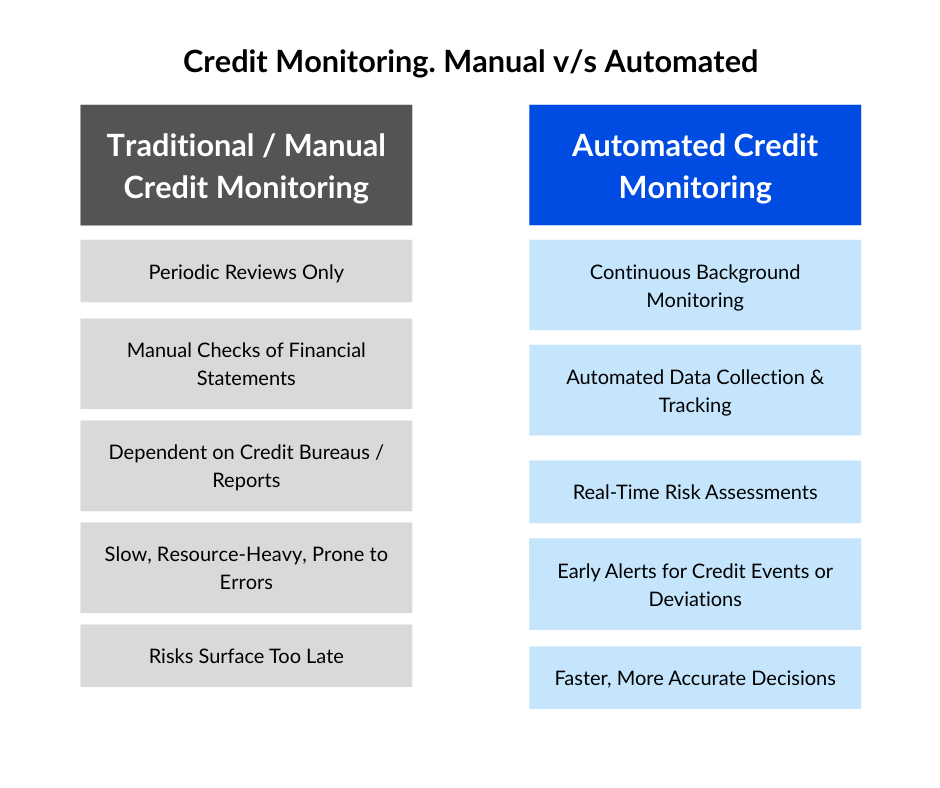
Traditionally, monitoring has relied on manual processes. Credit analysts review financial statements, check reports from credit bureaus, and compare them against internal records. These reviews can identify potential credit risks, but they’re slow, resource-heavy, and prone to human error. By the time a risk surfaces in static reports or outdated credit scores, the opportunity to act proactively is often gone.
Modern monitoring is shifting toward automation in credit. Instead of periodic reviews, automated systems run continuously in the background—collecting credit data, tracking credit applications, and running real-time risk assessments. These systems don’t just assess credit once; they watch for new credit events, changes in credit history, or deviations in payment behaviour, ensuring risks are flagged before they escalate.
In short, credit risk monitoring provides the feedback loop that keeps credit management effective. Without it, firms can’t enforce policies consistently, protect their credit portfolios, or make informed lending decisions. With it—especially when powered by automation—they gain control, speed, and accuracy.
The Benefits of Automating Credit Risk Monitoring
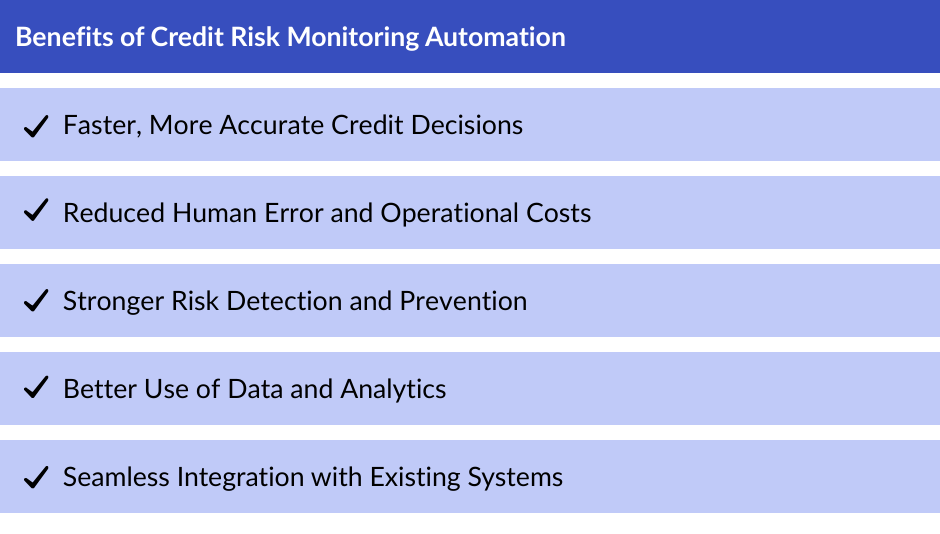
Manual reviews and spreadsheets may work for small portfolios, but they can’t keep pace with the complexity of modern lending. Credit risk automation takes what used to be a reactive, paper-heavy process and turns it into a proactive, real-time safeguard. For financial institutions and businesses, the benefits go well beyond efficiency—they directly improve outcomes in credit risk management.
Faster, More Accurate Credit Decisions
Automated systems cut down delays by replacing manual processes and manual data entry with continuous, standardized checks. This ensures credit applications are processed quickly and consistently, giving teams the information they need to make informed lending decisions without bottlenecks.
Reduced Human Error and Operational Costs
Every manual step—whether re-keying credit data or reconciling financial statements—creates opportunities for mistakes. Automated tools eliminate most of these risks, reducing manual errors and trimming operational costs tied to repetitive work. That frees credit teams to focus on higher-value risk assessments instead of routine tasks.
Stronger Risk Detection and Prevention
With automation in credit risk, monitoring doesn’t stop after onboarding. Automated credit reviews track live credit events, identify potential credit risks, and trigger alerts before they escalate into defaults. This proactive approach helps firms avoid poor credit decisions and supports more effective risk mitigation.
Better Use of Data and Analytics
Modern credit management software integrates multiple data points—from credit scores and credit bureaus to financial tools and internal records. Combined with machine learning algorithms and predictive analytics, automation makes it easier to analyze credit data in real time and keep accurate customer records.
Seamless Integration with Existing Systems
Automating monitoring doesn’t mean replacing everything you have. Credit risk management automation can be layered onto existing credit management processes, linking with ERP and other financial tools through data integration. This ensures consistency across all credit approvals and keeps policies enforced without disruption.
How Kolleno Transforms Credit Risk Monitoring
Kolleno brings automation directly into the heart of credit risk management, helping firms move past slow manual processes and siloed reviews. By integrating with external credit agencies, the platform enriches monitoring with reliable third-party data while automating new client checks, approvals, and ongoing assessments.
Instead of waiting for quarterly reviews or outdated reports, Kolleno delivers real-time credit alerts that flag potential credit risks as soon as they emerge. That gives finance teams the ability to respond early and prevent exposure from turning into losses.
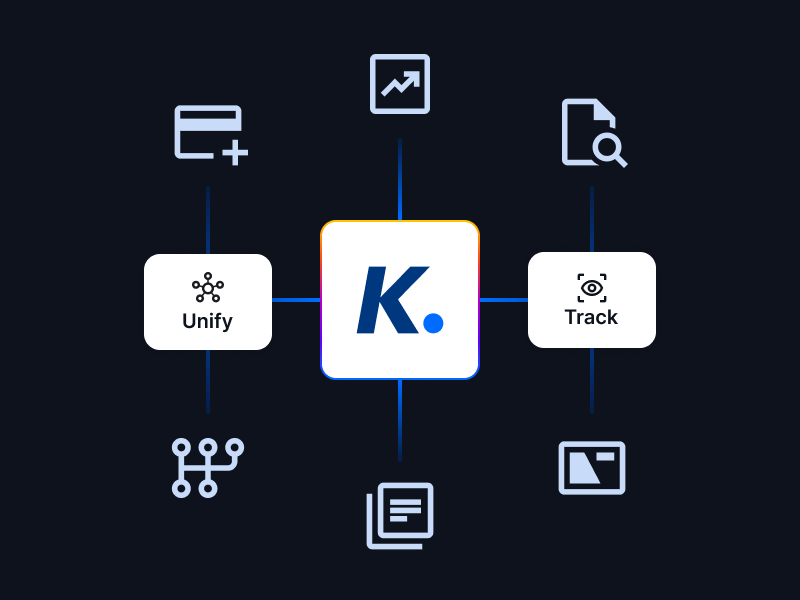
Beyond alerts, Kolleno unifies credit, risk, and collections data in one place, creating a single source of truth for credit analysts and finance leaders. Configurable workflows automate routine tasks, define escalation paths, and enforce credit policies consistently across portfolios.
The result is a proactive, preventative approach to monitoring that strengthens resilience, reduces operational costs, and empowers teams to make sharper, more informed credit decisions.
Final Thoughts
Automating credit risk monitoring isn’t just about efficiency—it’s about building resilience. By reducing reliance on manual processes, firms eliminate costly manual errors, cut operational costs, and move from reactive reviews to proactive protection. The result is sharper visibility into potential credit risks, stronger risk assessments, and ultimately more confident decision-making.
For financial institutions and businesses, the shift to credit risk management automation is now a competitive necessity. Platforms like Kolleno make that transition seamless—embedding automated systems into existing credit management processes, running automated credit reviews, and delivering real-time alerts that help teams act before risks escalate.Ready to see what automation can do for your credit risk management? Book a demo with Kolleno today.