









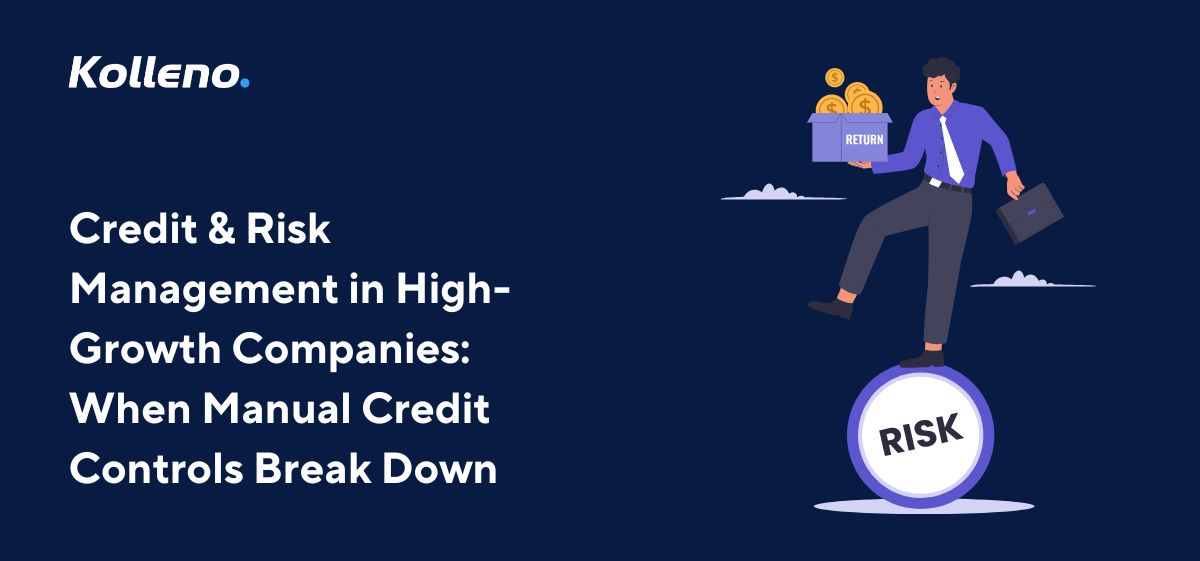
You’ve built a high-growth company by saying yes—yes to new customers, new markets, new opportunities. But somewhere between extending credit to your 100th customer and your 500th, the manual credit risk management process that got you here stops working. Credit decisions take too long, your credit team can’t keep up with credit approvals, and you’re discovering customers with serious financial difficulties only after they’ve stopped paying.
The shift from manageable to broken happens gradually, then suddenly. One month you’re handling credit assessments in spreadsheets with a small team. The next month you’re facing concentration risk you didn’t see coming, overdue payments climbing faster than revenue, and a sales team frustrated by credit limits they don’t understand. Manual credit controls break down because they weren’t designed for scale—they were designed for simplicity.
This guide walks through how to identify when manual processes are failing, what effective credit risk management looks like at scale, and how platforms like Kolleno give high-growth companies the risk management strategies they need without adding friction to the sales process.
The Importance of Credit & Risk Management for High-Growth Companies
Credit risk management isn’t just about avoiding bad debt—it’s about enabling sustainable growth without putting your financial health at risk. High-growth companies need to extend credit aggressively enough to win customers and capture market share, but conservatively enough to manage cash flow and prevent loan losses. Effective credit risk management gives you the framework to make informed credit decisions quickly, so sales teams can move fast while finance teams know credit exposure is under control.
The consequences of weak credit risk management compound as you scale. When you’re extending credit to dozens of new customers monthly, a few bad credit decisions create significant default risk within quarters. Late payments that were manageable at £5M revenue become cash flow crises at £20M. Concentration risk—where too much credit exposure sits with too few customers—sneaks up on growing companies who don’t actively monitor their credit portfolio. Without effective risk management, you discover problems only after customers stop paying, when your options shrink to expensive debt collection or bad debt write-offs.
Modern credit risk management means having clear credit policies that define appropriate credit limits based on customer’s credit risk, continuous monitoring that spots early warning signs of financial stress before payments stop, and risk mitigation strategies that reduce exposure to high risk accounts without damaging customer relationships. For high-growth companies, this isn’t about saying “no” more often—it’s about saying “yes” strategically, with real-time data on payment behavior and credit risk assessment backing every decision.
How to Identify When Manual Credit Controls Are Breaking Down
Manual credit risk management processes don’t fail overnight—they deteriorate gradually as transaction volumes grow and complexity increases. Here are the warning signs that your credit controls can’t keep pace with your business growth, and why each signal matters for your financial stability.
1. Your Credit Team Is Always Playing Catch-Up
Credit applications sit in queues for days or weeks waiting for review, sales teams complain that credit approvals are blocking deals, and your credit team works late just to stay current with assessments. This backlog means you’re making credit decisions based on outdated financial data, and high-value opportunities slip away to competitors who can approve credit faster.
2. You’re Discovering Payment Problems Too Late
Customers who are struggling financially stop paying before your team notices warning signs, overdue payments spike suddenly rather than gradually, and you’re learning about credit risk from collections issues rather than proactive monitoring. By the time late payments appear, the customer’s financial difficulties are already severe, limiting your options for risk mitigation and increasing the likelihood of bad debt.
3. Credit Limits Are Set Once and Forgotten
Credit limits established at onboarding never get reviewed even as customers’ payment behavior changes, customers with perfect payment history still have conservative limits that frustrate them, and high risk accounts with deteriorating payment patterns keep the same credit exposure. Static credit limits mean you’re either leaving revenue on the table with reliable customers or carrying unnecessary default risk with struggling ones.
4. Credit Data Lives in Spreadsheets and Email Threads
Credit decisions rely on information scattered across multiple systems and files, your credit team manually compiles payment history from bank statements and accounting software, and there’s no single view of a customer’s credit risk or payment behavior. When credit data isn’t centralized, credit assessments are inconsistent, risk evaluation takes longer, and critical early warning signs get missed in the noise.
5. Sales and Finance Are Constantly in Conflict Over Credit
Sales teams push for higher credit limits or faster approvals without visibility into risk, finance teams say “no” to deals without explaining the credit exposure concerns, and there’s no shared framework for balancing business growth with financial health. This friction slows decision-making, damages internal relationships, and forces escalations to senior leadership for routine credit decisions.
6. You Can’t Answer Basic Questions About Credit Exposure
Questions like “What’s our total credit exposure to customers in sector X?” or “How many customers are approaching their credit limits?” require manual data compilation that takes hours or days. Without real-time visibility into concentration risk, credit portfolio health, or trends in payment behavior, you’re managing credit blindly and can’t spot systemic problems until they become crises.
Credit & Risk Management Best Practices for High-Growth Companies
Manual credit controls break down because they can’t scale, but the solution isn’t just working harder—it’s working smarter with the right credit risk management tools and frameworks. Here are the best practices that help high-growth companies protect financial health while enabling sustainable growth.
Establish Clear, Scalable Credit Policies
Define standardized credit policies that specify credit assessment criteria, credit limits for different customer segments, payment terms, and escalation paths for exceptions. Clear policies ensure consistent credit decisions across your organization, reduce friction between sales teams and finance, and give your credit team a framework for making informed credit decisions quickly. Without documented credit policies, every decision becomes subjective, slowing approvals and creating inconsistent risk management.
Automate Credit Assessment and Risk Scoring
Use credit scoring models and automated credit risk assessment tools to evaluate creditworthiness consistently and quickly, rather than relying on manual financial statement analysis for every customer. Kolleno integrates with external credit agencies to pull credit reports and credit data automatically, applies configurable risk scoring based on payment history and financial health indicators, and flags high risk accounts for review while auto-approving low-risk customers. This automation reduces the time from credit applications to credit approvals from days to minutes while improving accuracy.
Implement Continuous Credit Monitoring
Move from one-time credit checks at onboarding to continuous monitoring that tracks payment behavior, identifies early warning signs of financial stress, and alerts your credit team when customers’ risk profiles change. Kolleno provides real-time credit alerts when customers show deteriorating payment patterns, exceed credit limits, or display other risk indicators, enabling proactive risk mitigation before late payments become delinquent accounts. Continuous monitoring turns credit management from reactive crisis handling into proactive risk management.
Centralize Credit Data and Customer Information
Consolidate credit information, payment history, financial statements, credit reports, and communication records in a single platform rather than scattering them across spreadsheets, email threads, and multiple systems. Kolleno unifies credit, risk, and collections data so your credit team has complete visibility into each customer’s credit risk profile, payment behavior, and financial health in one place. Centralized credit data enables faster credit decisions, more consistent risk evaluation, and better identification of concentration risk across your credit portfolio.
Use Behavioral Data to Refine Credit Decisions
Supplement external credit scores and financial statements with actual payment behavior data from your accounts receivable to make smarter credit decisions. Kolleno tracks how customers actually pay you—on time, late, with disputes, or cleanly—and uses this behavioral data to inform credit limit adjustments, payment terms, and risk assessment. Customers who consistently demonstrate strong payment behavior can earn higher credit limits, while those with deteriorating patterns get flagged for review before default risk materializes.
Create Alignment Between Sales and Finance
Give sales teams visibility into credit policies and risk considerations so they understand credit decisions, while giving finance teams context on customer value and strategic importance. Kolleno provides shared dashboards that show both commercial opportunity and credit exposure, enabling collaborative conversations about extending credit rather than friction-filled escalations. When both teams work from the same data and framework, credit approvals speed up and credit decisions balance growth objectives with financial stability.
Build Risk Mitigation Strategies into Your Process
Define clear risk mitigation approaches for different risk levels: payment plans for customers facing temporary financial difficulties, reduced credit limits or deposits for high risk accounts, and credit insurance or factoring for concentration risk. Kolleno’s configurable workflows let you automate appropriate responses based on risk levels—sending automated reminders for early-stage late payments, triggering manual reviews for accounts showing early warning signs, and escalating to debt collection specialists for seriously delinquent accounts. Structured risk mitigation protects cash flow while maintaining customer relationships where possible.
Final Thoughts
The warning signs are clear: credit teams playing catch-up, payment problems discovered too late, credit data scattered across spreadsheets, and mounting tension between sales and finance. High-growth companies can’t afford to wait until bad debt forces the issue—by then, the damage to cash flow and financial stability is already done.
Modern credit risk management isn’t about slowing down growth—it’s about protecting it. With clear credit policies, automated credit assessment, continuous monitoring, and centralized credit data, you can make informed credit decisions at the speed your business demands while keeping default risk and credit exposure under control.Kolleno’s credit risk management capabilities gives high-growth companies the framework they need: real-time credit alerts, automated workflows, integration with external credit agencies, and unified visibility across credit, risk, and collections. Ready to move beyond manual credit controls? Book a demo with Kolleno and see how effective credit risk management scales with your growth.
- The Importance of Credit & Risk Management for High-Growth Companies
- How to Identify When Manual Credit Controls Are Breaking Down
- 1. Your Credit Team Is Always Playing Catch-Up
- 2. You’re Discovering Payment Problems Too Late
- 3. Credit Limits Are Set Once and Forgotten
- 4. Credit Data Lives in Spreadsheets and Email Threads
- 5. Sales and Finance Are Constantly in Conflict Over Credit
- 6. You Can’t Answer Basic Questions About Credit Exposure
- Credit & Risk Management Best Practices for High-Growth Companies
- Establish Clear, Scalable Credit Policies
- Automate Credit Assessment and Risk Scoring
- Implement Continuous Credit Monitoring
- Centralize Credit Data and Customer Information
- Use Behavioral Data to Refine Credit Decisions
- Create Alignment Between Sales and Finance
- Build Risk Mitigation Strategies into Your Process
- Final Thoughts